
-
 The International Islamic Center for Call and ReliefAn international Islamic body that coordinates the activities of bodies and organizations Popular and official Islamic in the world
 -
 Let's draw Hope despite Pain
 -
 Achieving security and justice on earth according to the will of God
 -
 Promoting Islamic work
to be at the level of the civilizational message in emphasizing the unity of the human family
The International Islamic Council
An international organization that means coordination between Islamic organizations in the world in the field of advocacy and relief, headed by Al-Azhar Al-Sharif

25 years of giving and still giving

Upgrading humanitarian work to be on the level of the message of Islam

Medicine.accommodation. food
We Draw hope. Despite pain
News and Articles
12/04/2023
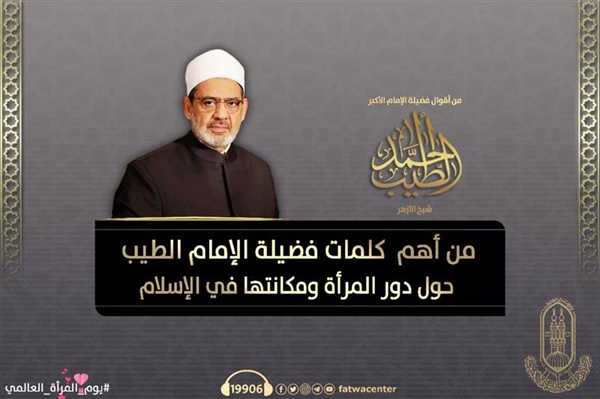
Messages of Sheikh Al-Azhar on International Women's Day
• I salute the women of the world who helped their families and communities to rise and stand firm in
Read More ...
01/25/2024
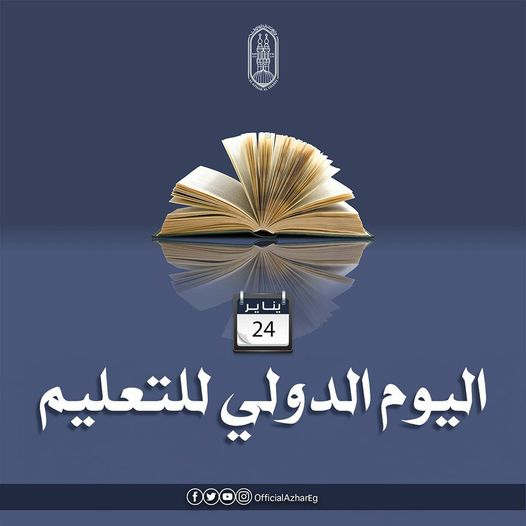
International Day of Education
09/07/2022
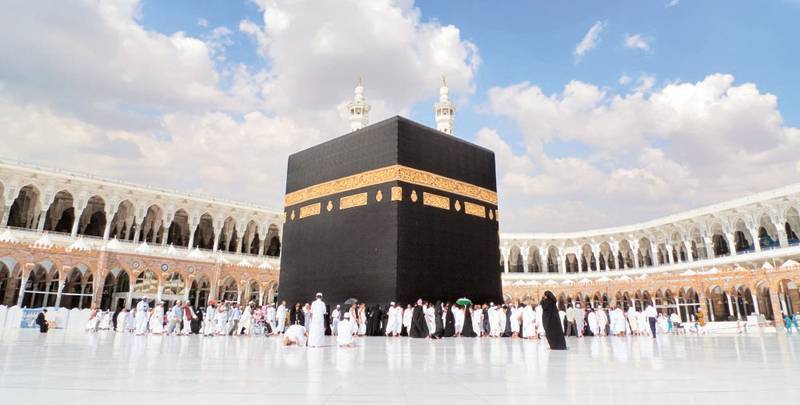
Hajj Rituals and Benefits For
Looking for a Charity to Support ?
An international Islamic body that coordinates the activities of popular and official Islamic bodies and organizations in the world. It is chaired by the Grand Imam, Prof. Ahmed Al-Tayeb, Sheikh of Al-Azhar, with two deputies, His Excellency Dr. Abdullah Maatouq.


Media Library
Member Organizations














Newsletter
Join our newsletter to receive our news
Members News
09/01/2022
Global Symposium organizes educational course for young people in Bolivia
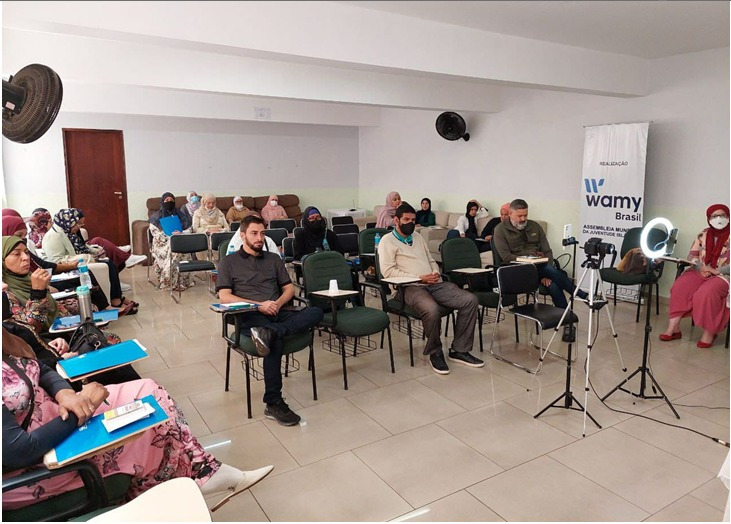
The office of the World Assembly of Muslim Youth held a four-day educational course for Muslim minority youth in Bolivia. The course was held in the city of Santa Cruz, located in the western region of South America.A number of trainers and heads of Islamic centers participated in presenting the course, in which they presented scientific programs and cultural lectures, answered the participants' inquiries and provided solutions to problems that concern the Muslim minority and new Muslims in Bolivia.For his part, the director of the seminar’s office in Brazil, Mr. Ali Abdouni, valued the efforts of the Kingdom of Saudi Arabia and its role in caring for Muslim minorities in the world, and providing all that qualifies them and helps them preserve their identity and religion.
Read More ...
09/01/2022
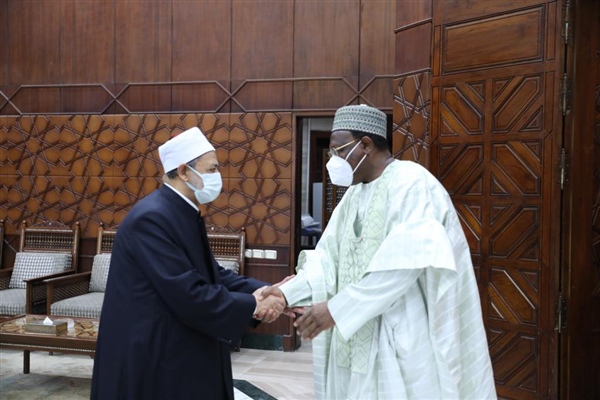
The Sheikh of Al-Azhar receives the Ambassador of Cameroon to establish an Azhari Institute in Cameroon
During his meeting with the Sheikh of Al-Azhar at the headquarters of the Grand Imam of Al-Azhar, Ambassador Mohamedou Lebring delivered a letter to the Grand Imam of the Republic of Cameroon's desire to establish a regional Azhar institute to serve the Muslims of Cameroon and Central Africa.Ambassador Mohamedou Lebreng said: The Cameroonian President sends his greetings to the Grand Imam, his wishes for continued health and wellness, and his appreciation for the strong relationship that binds the Cameroonian people to the Al-Azhar Institution, the institution that teaches the true Islamic religion and presents the moderate Islamic vision, pointing out that His Excellency welcomed the establishment of the Al-Azhar Institute. And his agreement to allocate two acres, capable of being increased, in a central and qualified location to receive students from all over the central African continent,And the establishment of a headquarters to receive Al-Azhar teachers and students of the institute, provided that the institute is an executive step for the establishment of the first Islamic university in Cameroon to serve all Muslims in West Africa. The Cameroonian ambassador indicated that this Azhar Institute will work to find practical solutions to the problem of accrediting and equivalent to Azhar certificates in the State of Cameroon, ensuring the future of Cameroonian students graduating from Al-Azhar University, and qualifying students who receive scholarships to complete their studies in the faculties of Al-Azhar University.For his part, His Eminence the Grand Imam sent his greetings and appreciation to the Cameroonian President, and his eminence’s welcome for the establishment of the Al-Azhar Institute in Cameroon, and Al-Azhar’s readiness to provide all support to serve the Muslims of Cameroon, stressing that Al-Azhar is ready to provide all requirements; to implement the proposal on the ground; Because it is an extension of Al-Azhar’s relationship with Cameroon, and it also represents a religious dimension, which is meeting the needs of Muslims in Cameroon and central Africa, and that we are constantly trying to meet the needs of African peoples from a doctor, engineer and teacher along with the middle preacher and the Azhar scholar.
Read More ...
08/18/2022
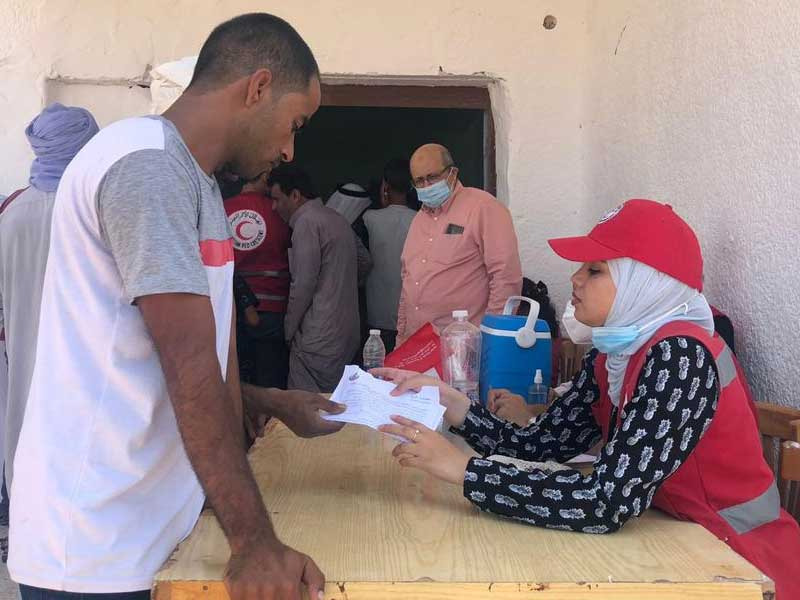
The Sharia Society directs a medical convoy to the city of Sheikh Zuweid
Under the auspices of the Ministry of Solidarity, and in coordination with the Egyptian Red Crescent, and within the framework of the role it plays with various state institutions, the main legitimate society directed a medical convoy to the city of Sheikh Zuweid in North Sinai Governorate, to sign a medical examination on the people in many specialties.The two-day convoy (Thursday and Friday, August 4 and 5) is the first of the medical convoys that are scheduled to run over a period of 3 months (August, September and October) in the villages of Sheikh Zuweid and Rafah in North Sinai, at a rate of two convoys per month.The convoy included internal medicine, orthopedics, pediatrics and dermatology, as well as an x-ray machine to perform regular x-rays for patients.The doctors, members of the convoy, conducted medical examinations on 184 cases, including 37 children, 29 skin cases, 33 orthopedic cases, 46 internal cases, 39 cases of conjunctivitis, in addition to 9 cases of normal x-rays.
Read More ...
08/03/2022
Good news for international students Announcing the opening of the application for the scholarship of the Supreme Council for Islamic Affairs
Within the framework of the global pioneering role of the Arab Republic of Egypt in spreading enlightened moderate thought in various countries of the world, and its keen interest in sponsoring international students who are searching for correct Islamic science and moderate thought, the Supreme Council for Islamic Affairs at the Ministry of Awqaf is pleased to announce the opening of applications for the grant of the Supreme Council for Islamic Affairs For international students studying at different educational levels in Al-Azhar Al-Sharif, who have official residence in the Arab Republic of Egypt, and are not registered for any scholarship in Egypt or at the expense of their countries.Noting that the scholarships disbursed by the Supreme Council for international students are as follows:1- Undergraduate students - outside the university city (1500 pounds) per month.2- Undergraduate students inside the university city (1,000 pounds) per month.3- High school students (700 pounds per month).4- Preparatory school students (500 pounds per month).This is in addition to participating in educational and recreational camps held by the Supreme Council for Islamic Affairs, Quranic, scientific and cultural competitions, and obtaining gifts from publications of the Supreme Council for Islamic Affairs in Arabic and various foreign languages according to the language of each student.Who has the right to apply:First: Successful university students with a grade of “good” or higher during the previous academic year from all countries.Second: Successful university students who obtained an acceptable grade or higher during the previous academic year from African countries.Third: Students of Al-Azhar Preparatory and Secondary Institutes who succeeded in the previous academic year.International students who are entitled to apply for a scholarship from the Supreme Council of Islamic Affairs must register their data on the following link, within fifteen days from its date.To register the data, click on the following link https://forms.gle/SPW4gEVTAffeQFuJ7Note that if the student is accepted for the scholarship, he must complete the procedures with the following documents:1. A copy of the passport with review of the original.2. A copy of the valid residency with review of the original, or evidence of applying for residency renewal.2. Academic progression indicating the last year’s estimate for university students, or a statement in the total for institute students.3. A letter from his country's embassy.4- A statement that he is not restricted to any scholarship inside the Arab Republic of Egypt.5. A statement on whether or not he resides in the university dormitory or the mission city.6. An approved health certificate stating that he is free of infectious diseases.
Read More ...
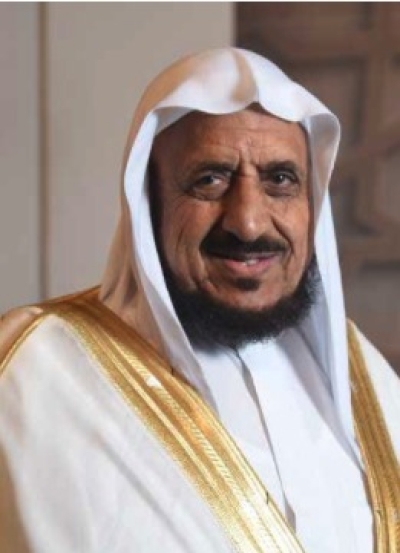
Dr.Ahmed El - Tayb
President of the International Islamic Council for Call and Relief

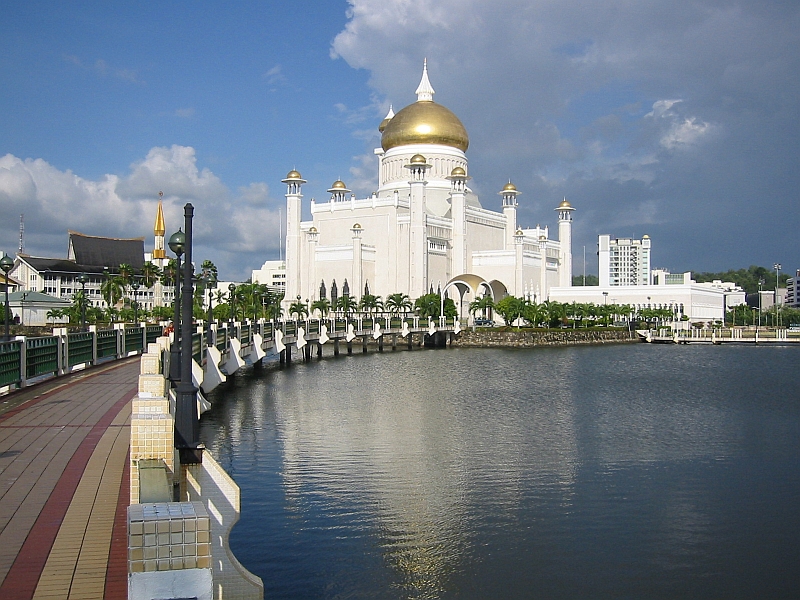
Sultan Omar Ali Saifuddin Mosque
Sultan Omar Ali Saifuddin Mosque or the Golden Mosque, is a royal Islamic mosque built on a small lake in the middle of Bandar Seri Beguan, the capital of the Sultanate of Brunei. It was built in 1958. It is classified as the first mosque in terms of architectural style in the Asian and Indian Ocean region and the most attractive for tourism. The Sultan Omar Ali Saifuddin Mosque is one of the distinctive landmarks of the Sultanate of Brunei.
The Sultan Omar Ali Saifuddin Mosque is one of the symbols of Islam in Brunei, and is located in the capital, Bandar Seri Begwan. It was completed in 1958 and is considered a model of modern Islamic architecture. It is one of the most important tourist attractions in Brunei.
The architecture in this mosque is a mixture of Islamic architecture and Italian architecture. It was designed by an Italian architect, and built on an artificial lake near the bank of the Brunei River, surrounded by water on all sides. The mosque consists of a large marble building, a group of minarets, a golden dome, and a garden filled with a water fountain. The mosque is surrounded by a green garden with flowering plants
>Read More ...
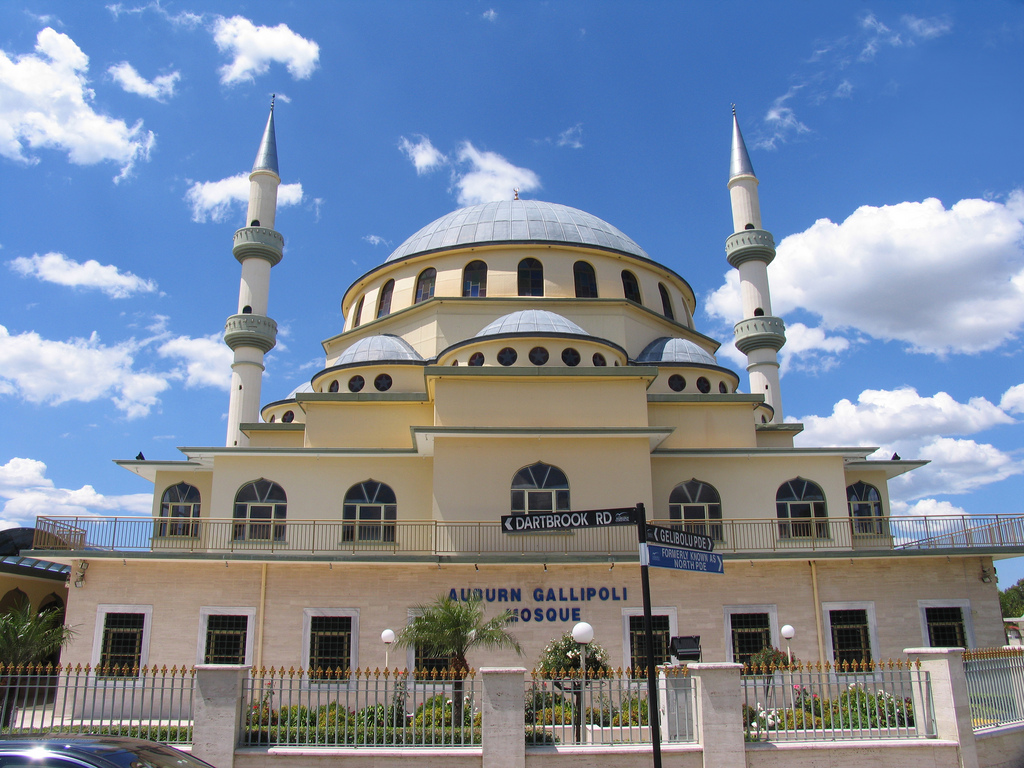
Auburn Gallipoli Mosque
The construction of the mosque began in 1986, and its construction was completed and officially opened on November 28, 1999, and it took 13 years to build due to lack of funds and time to raise funds through donations.
The project was initiated and largely financed by Turks and other Muslims of other races. The total cost of the project is about six million dollars. The mosque is built in the Ottoman style, on an area of 4,200 square meters.. It includes, in addition to the prayer hall, other study and meeting rooms, in addition to a library.
>Read More ...
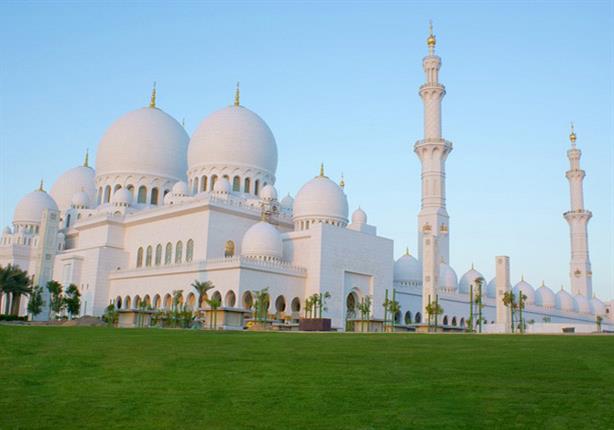
Sheikh Zayed Mosque
The Sheikh Zayed bin Sultan Al Nahyan Mosque is a prominent Islamic edifice in the UAE. The mosque is located in the city of Abu Dhabi and is known locally as the Sheikh Zayed Mosque or the Grand Mosque or also the Sheikh Zayed Grand Mosque. It is the fifth largest mosque in the world in terms of total area after the Grand Mosque, the Prophet’s Mosque, the Umayyad Mosque in Damascus and the Hassan II Mosque in Casablanca with an area of 412.22 square meters without the reflective lakes around it, and one of the ten largest mosques in the world in terms of the size of the mosque. The mosque can accommodate more than 7,000 worshipers inside, but it is possible, with the use of external spaces, to accommodate about 40,000 worshipers for all sections of the mosque building, and its distinctive features are the presence of four minarets in the corners of the outer courtyard, 107 meters high for the minaret completely clad in white marble.
The late Emirati president, Sheikh Zayed bin Sultan Al Nahyan, had directed the construction of this mosque in 1986 through the Department of Public Works in Abu Dhabi, seeking to make this mosque an Islamic edifice that consolidates and deepens Islamic culture, its concepts and religious values, and a center for Islamic sciences. Where he announced the start of designing the mosque in the form of an international competition, and the first prize was won by the Consulting Office of Concert in Abu Dhabi, then the competition was repeated in 1987, and the Arab Belgian Office Company (Tractebel Gulf currently) won the competition over 35 countries participating in the competition. The mosque was under the management of Eng. Youssef Abdalke, and there were major architects who completed and developed the design, namely: Engineer Bassem Barghouti, Engineer Moataz Al-Halabi, and Engineer Imad Malas. And after hundreds of engineers worked on its development and under the supervision of the Department of Public Works in Abu Dhabi. The first prayer that was performed in the mosque was the Eid al-Adha prayer in the year 1428 AH (December 19, 2007), but at that time the construction work in the mosque was not completely finished. The construction work was completed in March 2008. The total cost of the project amounted to two billion and 167 million dirhams.
Construction work: The construction work started in 1998 under the supervision of the Department of Municipal Affairs. The project was implemented in two phases. The first included building the foundations and the concrete structure, and its cost amounted to 750 million dirhams. As for the second phase, it included the interior and exterior finishing and decoration works, and it cost one billion and 267 dirhams. An amount of 150 million dirhams was also spent on external works. The mosque was built at a height of 9 meters above street level on the orders of Sheikh Zayed personally, so that the mosque can be seen from different angles and from a distance. Several companies worked on the project, as a number of companies stopped at different times for several reasons. The English company Halcrow began its work as a consultant on the project in 2001, and worked with the Italian contracting company Impreglo to finish the project.
The mosque from the inside: The number of columns inside the main prayer hall is 24 columns bearing huge ceilings and domes, and designed so that one column is divided into four pillars, carrying the arches carrying the domes. These columns are covered with white marble inlaid with mother-of-pearl in pink and vegetal motifs, which add beauty and elegance to the hall. The internal dimensions of the mosque are 50 meters by 55 meters, and the ceiling height is 33 meters from the ground to the main dome, with a height of 45 meters.
Mosque carpet: The mosque’s floor covers the largest carpet in the world, with an area of 5,627 square meters and designed with fine and beautiful arts that give the mosque the uniqueness. The rug is hand-made and woven in Iran by the Iran Carpet Company, with 1200 weavers, 20 technicians and 30 workers. It has 2,268 million knots, and the rug weighs 47 tons, 35 tons of which are wool and 12 tons of cotton. Cost the carpet about 30 million dirhams.
Mosque domes: The main dome of the mosque is the largest in the world, with a height of 83 meters and an internal diameter of 32.8. The dome weighs a thousand tons, and the interior is decorated with fiber-reinforced plaster, designed by Arab artists with unique floral motifs, designed specifically for the mosque, in addition to writing Quranic verses. The number of domes in this mosque is 82 domes of different sizes, covering the external corridors and the main and side entrances.
The courtyard and the surroundings: the outer courtyard of the mosque: The floor of the outer courtyard of the mosque was designed to be a system of huge concrete slabs mounted on concrete pillars, and covered with the finest types of marble decorated with colorful vegetal designs and using mosaics to cover the entire courtyard area of 17,000 square meters, among the largest existing open spaces In mosques in the Islamic world. The number of columns in the outer courtyard in the corridors surrounding the courtyard is 1,448, covered with marble inlaid with semi-precious stones, and with floral designs and colorful flowers, with gold-plated metal crowns. The outer corridors of the mosque were surrounded by water lakes that reflect the facades of the mosque, which adds to the design distinction, and its floors are covered with white marble with the use of green marble in the corridors that lead to the courtyard. Skilled workers specially brought from India, in addition to the crown of the columns, which is designed in the form of a palm-shaped aluminum gilt. In addition, in both the north-east corner and the south-east are places of ablution, consisting of 80 toilets and 100 ablution points.
The preacher and the imam: The preacher: His Eminence Sheikh Waseem Youssef. . . Imam: Reciter Idris Abkar.- Reciter Yahya Aishan.
Al-Jami Library: It contains three thousand titles, distributed in various scientific and cultural fields, in more than a dozen living languages, including collections of valuables.
>Read More ...
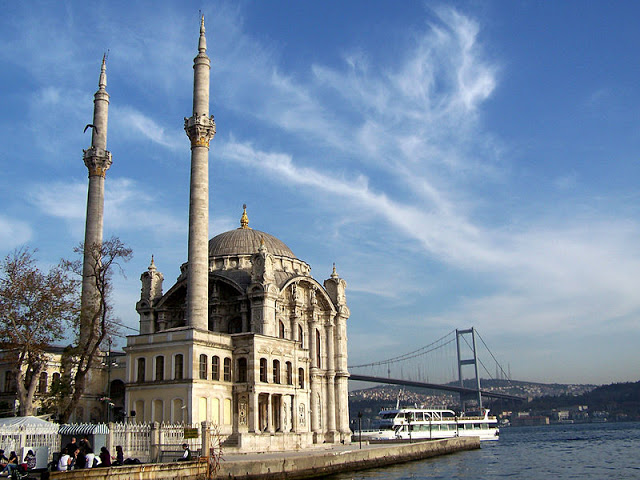
Ortakoy Mosque or Mejidi Mosque in Istanbul
Ortakoy Mosque or the Majidi Mosque Büyük Mecidiye Camii was built in the Ortaköy area on the shore of the Bosphorus, and in its place was the mosque built by the son-in-law of Minister Ibrahim Pasha, Mahmud Agha.
In 1853 AD, the Ortakoy Mosque was built by Sultan Abdul Majid (1823 - 1861) AD
On the door of the mosque there is his seal and writing indicating that.
The engineer who supervised the construction of the mosque is Garabet Amira Balyan and his son Nigoğayos, who also designed the Dolmabahce Mosque.
The foundations of the mosque were restored as a result of poor construction in 1960 AD, and its foundations were strengthened to a depth of 20 m.
The mosque was inaugurated for worship in the nineteenth century within two blocks of building, the mosque block and the Sultan’s forum block, which are adjacent to each other in the north and south.
The area of the place of worship is about (12.15 - 12.25) m. In addition, there is a small space in the northern section of the mosque.
The walls of the mosque are arched inward, and reinforcement beams were built for them to increase its durability. The mosque was also illuminated by high and wide windows.
The mosque has two square minarets at both ends of the Sultan's forum, which are thin and beautiful.
In recent years, the inscriptions and decorations written by Baroque and Amber in the inner section of the mosque have been restored.
>Read More ...